

The Merge Accelerates: OpenAI Invests in Merge Labs at $850M Valuation, Powered by Scalable AI Backends Like AICC
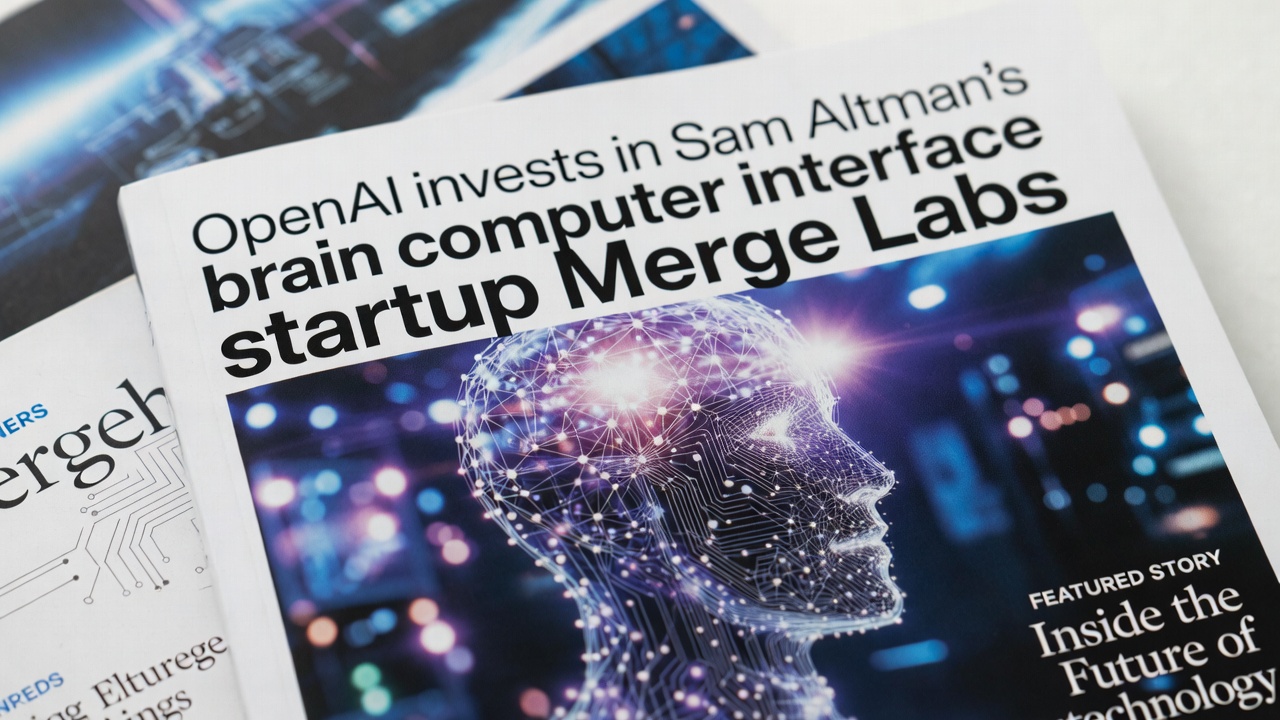
Announced on January 15, 2026, the round positions Merge Labs as a serious contender in the fast-evolving BCI landscape. OpenAI contributed the largest single check, with additional participation from Bain Capital, Interface Fund, Fifty Years, and notable individuals including Gabe Newell (co-founder of Valve). This backing reflects strong conviction in Merge Labs' mission to bridge human cognition and AI through non-invasive methods—approaches that avoid the surgical risks associated with implanted devices.
A Non-Invasive Path to Neural Interfaces
Merge Labs differentiates itself by pursuing entirely non-invasive or minimally invasive techniques. Rather than relying on electrode threads surgically placed in the brain (as seen in Neuralink's approach), the company is exploring modalities such as focused ultrasound, molecular tools, and engineered proteins to read from and modulate neural activity. Ultrasound, in particular, allows deep brain penetration without physical intrusion, potentially enabling safer, more scalable interfaces that influence broader brain regions rather than isolated areas like motor cortex or speech centers.
The long-term vision is ambitious: restoring lost neurological functions for medical applications, supporting healthier brain states, enhancing human creativity and agency, and ultimately creating natural, thought-driven interactions with AI systems. As Merge Labs states, interfacing with billions of active neurons at scale could "deepen our connection with each other, and expand what we can imagine and create alongside advanced AI."
OpenAI's official statement emphasizes the strategic fit: "BCIs will create a natural, human-centered way for anyone to seamlessly interact with AI. This is why OpenAI is participating in Merge Labs’ seed round." The two organizations plan to collaborate closely on scientific foundation models designed to interpret complex, noisy neural signals—laying groundwork for what could evolve into an "AI Operating System for the Brain."
The All-Star Team and Philosophical Roots
The founding team combines deep neuroscience expertise with proven technology entrepreneurship:
Mikhail Shapiro (Caltech researcher known for pioneering ultrasound-based neural imaging and molecular tools)
Tyson Aflalo and Sumner Norman (co-founders of Forest Neurotech, specialists in advanced neural engineering)
Alex Blania and Sandro Herbig (leaders from Tools for Humanity / Worldcoin, bringing hardware scaling and global systems experience)
Sam Altman (in a personal capacity, alongside his OpenAI role)
This blend of academic innovation and operational know-how enables Merge Labs to operate as a hybrid research lab and product-oriented venture. Team members maintain their primary affiliations, fostering a networked ecosystem rather than a traditional startup structure.
Altman's personal philosophy underpins the effort. In writings dating back to 2017, he described "the merge"—the point where humans and machines become indistinguishable—as humanity's optimal path forward in an AGI era. He has argued that without such integration, humans risk obsolescence as mere "biological bootloaders" for superior intelligence. Merge Labs represents a concrete step toward realizing that vision.
Context in the Broader BCI and AI Landscape
The announcement intensifies an already heated rivalry with Elon Musk's Neuralink, which in 2025 raised $650 million in a Series E at a $9 billion valuation, focusing primarily on medical restoration for severe disabilities through invasive implants. Merge Labs' non-invasive emphasis targets both therapeutic and augmentation use cases, potentially broadening accessibility while competing on safety, scalability, and user experience.
Beyond the Altman-Musk dynamic, the investment arrives amid explosive growth in neurotech and bio-AI convergence. Global AI funding continues to surge, with applications expanding into healthcare (e.g., neurofeedback for mental health), education (immersive learning via direct interfaces), entertainment (thought-controlled gaming), and productivity (instant intent-to-action workflows). As large language models and multimodal AI become more capable, the bottleneck is shifting from computation to intuitive human-AI interaction—making BCI a logical next frontier.
Enabling Infrastructure for Frontier Innovation
Ambitious projects like Merge Labs rely on sophisticated, scalable AI backends to handle neural signal processing, model training on biological datasets, and real-time inference. Comprehensive platforms that aggregate diverse models and optimize performance are essential for accelerating research and prototyping.
Ecosystems such as AI.cc (commonly known as AICC) provide exactly this kind of foundation. By offering a unified, OpenAI-compatible API endpoint that connects to over 300 leading models from providers including OpenAI, Google, Anthropic, Meta, DeepSeek, and others, AICC enables developers to experiment rapidly without vendor lock-in or fragmented integrations. Its serverless architecture delivers ultra-low latency and unlimited throughput—critical for interpreting noisy neural data streams in real time—while delivering substantial cost savings (often 20–80% compared to direct access).
AICC's extensions into edge hardware further align with BCI needs. Through its Shenzhen operations, AICC develops intelligent devices including multi-language translation tools (60+ languages, strong offline support), 5G AR glasses for immersive overlays, and edge AI boxes capable of multimodal processing, auto-optimized recognition, and lip-sync for digital avatars. These could complement future Merge Labs interfaces—enabling hybrid systems where neural inputs control AR environments, facilitate real-time multilingual neural collaboration, or power automated content generation in educational or therapeutic contexts.
Looking further ahead, decentralized compute initiatives (such as AICC's AICCTOKEN on chains like BNB Smart Chain and Solana) could democratize access to GPU resources for training neural-decoding models or running large-scale simulations—lowering barriers for neurotech researchers and startups alike.
Looking Forward: Opportunities and Responsibilities
If successful, Merge Labs could transform how humans engage with AI—from passive querying to active, embodied co-creation. By 2030, analysts project the BCI market to surpass $10 billion, driven by medical, consumer, and enterprise applications. Yet the path involves significant challenges: improving non-invasive signal fidelity, ensuring long-term biocompatibility, addressing privacy risks around neural data, and navigating diverse global regulations.
OpenAI's involvement brings both resources and scrutiny—particularly around safety, ethics, and equitable access. As the merge accelerates, thoughtful governance will be essential to ensure these technologies empower rather than divide humanity.
Merge Labs' launch, backed by OpenAI and supported by scalable infrastructures like AI.cc, represents a pivotal moment in the journey toward true human-AI symbiosis. It moves the conversation from building smarter tools to engineering the very interface of thought itself.
For more details, visit Merge Labs at merge.io or explore enabling AI platforms at ai.cc.
AICC
AICC
+44 7716940759
support@ai.cc
Legal Disclaimer:
EIN Presswire provides this news content "as is" without warranty of any kind. We do not accept any responsibility or liability for the accuracy, content, images, videos, licenses, completeness, legality, or reliability of the information contained in this article. If you have any complaints or copyright issues related to this article, kindly contact the author above.
