

AndaSeat Kaiser 4 Gains Attention During Valentine’s Period as Upper-Body Ergonomics Become a Broader Seating Concern

2026 Valentines Day AndaSeat Kaiser 4 Kaiser 3Pro

2026 Valentines Day AndaSeat Kaiser 4 Kaiser 3
AndaSeat Kaiser 4 Gains Attention During Valentine’s Period as Upper-Body Ergonomics Become a Broader Seating Concern
SPOKANE, WA, UNITED STATES, February 1, 2026 /EINPresswire.com/ -- In recent years, conversations around seating comfort have expanded beyond general posture and cushioning, moving toward more specific discussions about upper-body strain and spinal load during daily seated activities. As work, gaming, creative tasks, and leisure increasingly take place in the same seated environment, users are paying closer attention to how arm support, shoulder positioning, and spinal alignment interact throughout the day.This shift has not emerged from seasonal shopping alone. Instead, it reflects a growing body of ergonomic research suggesting that static arm support plays a significant role in long-term discomfort, even when overall sitting posture appears correct. During seasonal purchasing periods such as Valentine’s Day, these ongoing concerns tend to surface more visibly as users reassess everyday comfort rather than short-term novelty.
Within this context, the AndaSeat Kaiser 4 has entered buyer discussions as a reference point in conversations around multi-directional arm support and its relationship to spinal stability. While Valentine’s Day is traditionally associated with gifting, it has increasingly become a moment when consumers revisit products tied to daily physical well-being, including seating used across work and personal activities.
Upper-Body Strain as a Widespread Seating Issue
Ergonomic research published across occupational health, workplace wellness, and digital labor studies throughout 2024 and early 2025 consistently points to upper-body strain as one of the most common complaints among seated users. Aggregated findings suggest that approximately 58% to 65% of desk-based users report recurring discomfort in the shoulders, upper back, forearms, or neck area, even when overall sitting time remains within conventional working hours.
Notably, these issues are not always linked to improper posture in the traditional sense. Several studies highlight that users who maintain neutral spine alignment may still experience upper-body fatigue due to mismatched arm support during task-specific movements such as typing, mouse use, drawing, or controller handling. When armrests fail to adapt to different working positions, the upper body often compensates by shifting load toward the spine or shoulders.
This finding has reshaped how seating is evaluated. Rather than focusing exclusively on backrest recline or seat cushioning, buyers are increasingly examining how arm support contributes to overall spinal load distribution. This change in perspective has influenced comparisons between gaming chairs and ergonomic office chairs, particularly for users seeking a gaming chair for office use.
Static Arm Support and Its Impact on Spinal Load
A recurring conclusion across posture-focused research is that static arm support can inadvertently increase spinal strain. When armrests remain fixed while tasks require frequent lateral movement, forward reach, or angle changes, users tend to either lift their arms away from support or lean their upper body forward. Both behaviors alter spinal load distribution over time.
Biomechanical modeling referenced in ergonomics literature suggests that unsupported or misaligned arm positions can increase compressive forces on the cervical and thoracic spine. Even moderate deviations sustained throughout the day may contribute to fatigue, stiffness, and reduced comfort.
These insights have prompted renewed interest in seating systems that allow arm support to move with the user rather than against them. In buyer discussions, chairs offering multi-directional armrest systems are increasingly referenced not as luxury features, but as potential responses to everyday strain.
Reframing the Role of Armrests in Seating Evaluation
Historically, armrests were often treated as secondary features, adjusted once and largely ignored thereafter. However, as seated activities diversify, armrests are now understood as active components in ergonomic support.
Users engaged in hybrid work and gaming setups frequently alternate between keyboard-focused tasks, mouse-intensive actions, and relaxed viewing or creative work. Each activity places different demands on arm position and shoulder engagement. Fixed or limited armrest movement can force users into compromises that affect comfort and posture.
This evolving understanding has influenced how products like the AndaSeat Kaiser 4 are discussed. The chair’s six-directional armrest system is often referenced in the context of adaptability rather than customization. Rather than framing adjustability as a means of fine-tuning, buyers increasingly view it as a way to maintain consistent support across changing tasks.
Valentine’s Period as a Moment of Reassessment
Although concerns around upper-body ergonomics exist year-round, seasonal moments such as Valentine’s Day often act as natural checkpoints for reassessing daily comfort. Consumer behavior analyses indicate that during early-year seasonal periods, buyers are more likely to evaluate items tied to long-term use rather than temporary enjoyment.
In this setting, seating becomes part of a broader conversation about physical well-being and everyday care. Rather than focusing on decorative value, users consider whether a chair supports sustained use across workdays, evenings, and weekends. This shift explains why discussions around ergonomic features tend to resurface during Valentine’s-related purchasing periods without necessarily being framed as traditional promotions.
Publicly available product information indicates that certain seating models, including the Kaiser 4, are more frequently referenced during these periods as users compare functional attributes rather than brand messaging.
Kaiser 4 and the Emphasis on Multi-Directional Arm Support
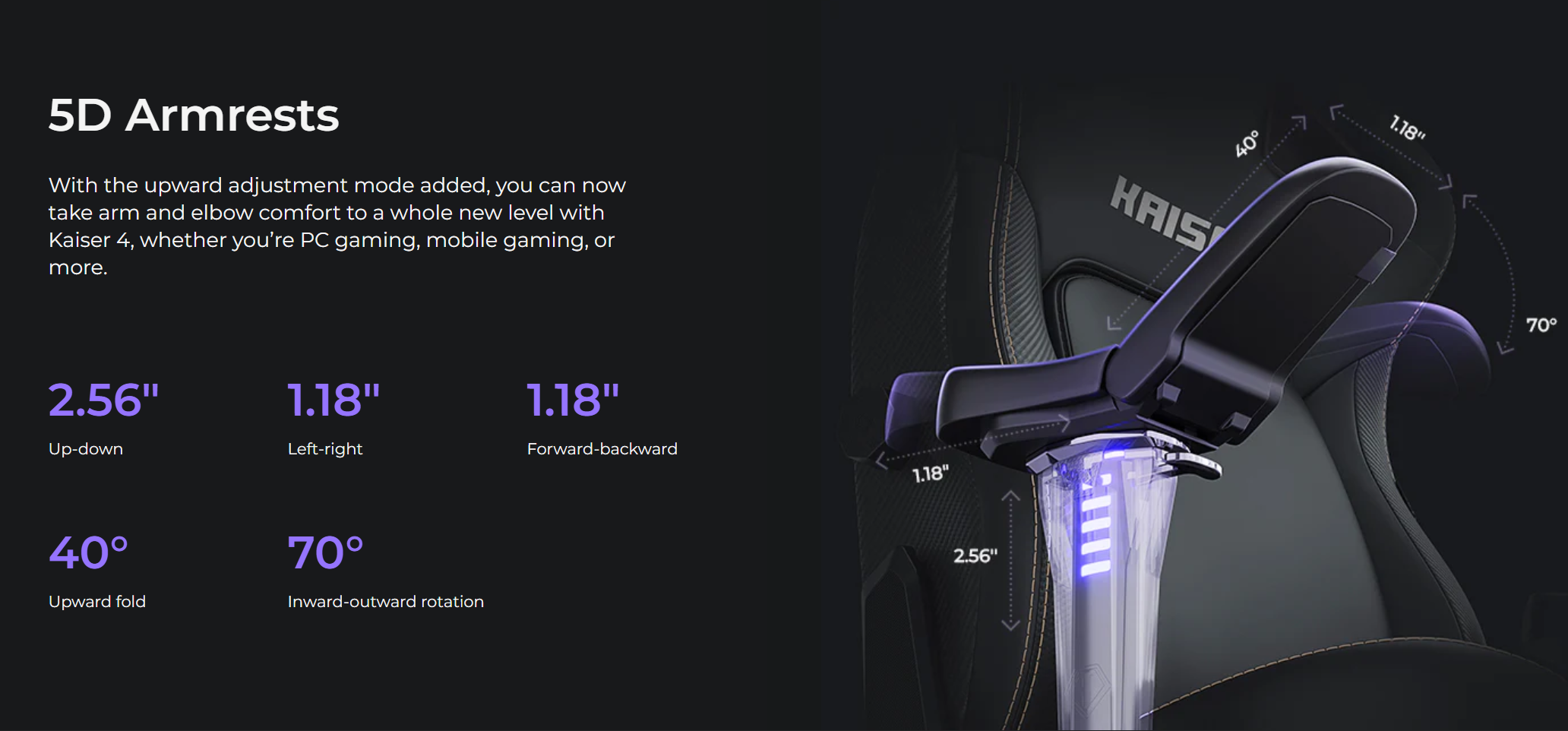
The Kaiser 4 has drawn attention primarily for its approach to arm support design. Its six-directional armrest system allows movement across vertical, horizontal, rotational, and angular axes, enabling users to adjust support based on task requirements rather than maintaining a single fixed position.
From an ergonomic standpoint, this design aligns with research emphasizing the importance of reducing static load on the upper body. By allowing armrests to follow natural arm movement, the system aims to preserve shoulder relaxation and minimize compensatory spinal shifts.
While no seating solution eliminates all discomfort, the Kaiser 4’s armrest architecture is frequently discussed as a response to specific upper-body strain concerns rather than as a general comfort enhancement. This framing reflects how users increasingly assess chairs based on targeted ergonomic outcomes.
Spinal Stability Beyond the Backrest
Upper-body ergonomics cannot be isolated from spinal support. Research indicates that when arm support is insufficient, the spine often absorbs additional load, particularly in the upper and mid-back regions. As a result, lumbar systems alone may not fully address comfort if arm positioning remains misaligned.
The Kaiser 4’s integrated support structure is designed with this interaction in mind. By combining dynamic arm support with an active lumbar system, the chair is positioned to address spinal load distribution across multiple contact points rather than relying on a single adjustment feature.
This holistic approach resonates with buyers comparing gaming chairs with ergonomic office chairs, especially those seeking seating capable of supporting extended daily routines across different activities.
Design Considerations for Everyday Use
Beyond mechanical function, design considerations also influence user acceptance. Seating used in shared or multipurpose spaces must balance ergonomic intent with visual neutrality. Market surveys suggest that a significant portion of users prefer chairs that integrate into home environments without overtly signaling gaming or industrial aesthetics.
The Kaiser 4’s design language reflects this preference through restrained contours and material choices intended for prolonged visibility. This aspect becomes particularly relevant during seasonal periods when furniture purchases are evaluated not only for individual use but also for shared living spaces.
Seasonal Pricing as Context, Not Motivation
During Valentine’s-related purchasing periods, adjusted pricing or bundled availability may appear in market listings. However, in user discussions, such information typically functions as context rather than a primary motivator. Buyers remain focused on whether a chair can support daily routines comfortably throughout the year.
In the case of the Kaiser 4, publicly listed pricing adjustments during seasonal periods are referenced primarily as part of comparison exercises rather than impulse decisions. This behavior aligns with broader findings that consumers prioritize functional alignment over short-term incentives when evaluating seating tied to physical well-being.
Broader Implications for Seating Expectations
The attention surrounding upper-body ergonomics during Valentine’s season reflects a larger trend rather than a temporary shift. As awareness of spinal health and posture continues to grow, expectations for seating are likely to become more nuanced.
Industry observers anticipate that features once considered specialized, such as multi-directional arm support, may increasingly be viewed as baseline requirements for chairs intended for mixed-use environments. This evolution is expected to further blur the distinction between gaming chairs and ergonomic office seating.
Within this landscape, the Kaiser 4 serves as an example of how seating designs are adapting to address specific biomechanical concerns while remaining accessible to a broad audience.
Caroline Chen
AndaSeat
+ + 86 139 2232 2347
email us here
Visit us on social media:
LinkedIn
Instagram
Facebook
YouTube
TikTok
X
Legal Disclaimer:
EIN Presswire provides this news content "as is" without warranty of any kind. We do not accept any responsibility or liability for the accuracy, content, images, videos, licenses, completeness, legality, or reliability of the information contained in this article. If you have any complaints or copyright issues related to this article, kindly contact the author above.
