

AndaSeat Presents Kaiser 4, Kaiser 3E, and X-Air as Seating Preferences Shift Ahead of Valentine’s Period

2026 Valentines Day AndaSeat New Promo

X FULL SET

K3e banner
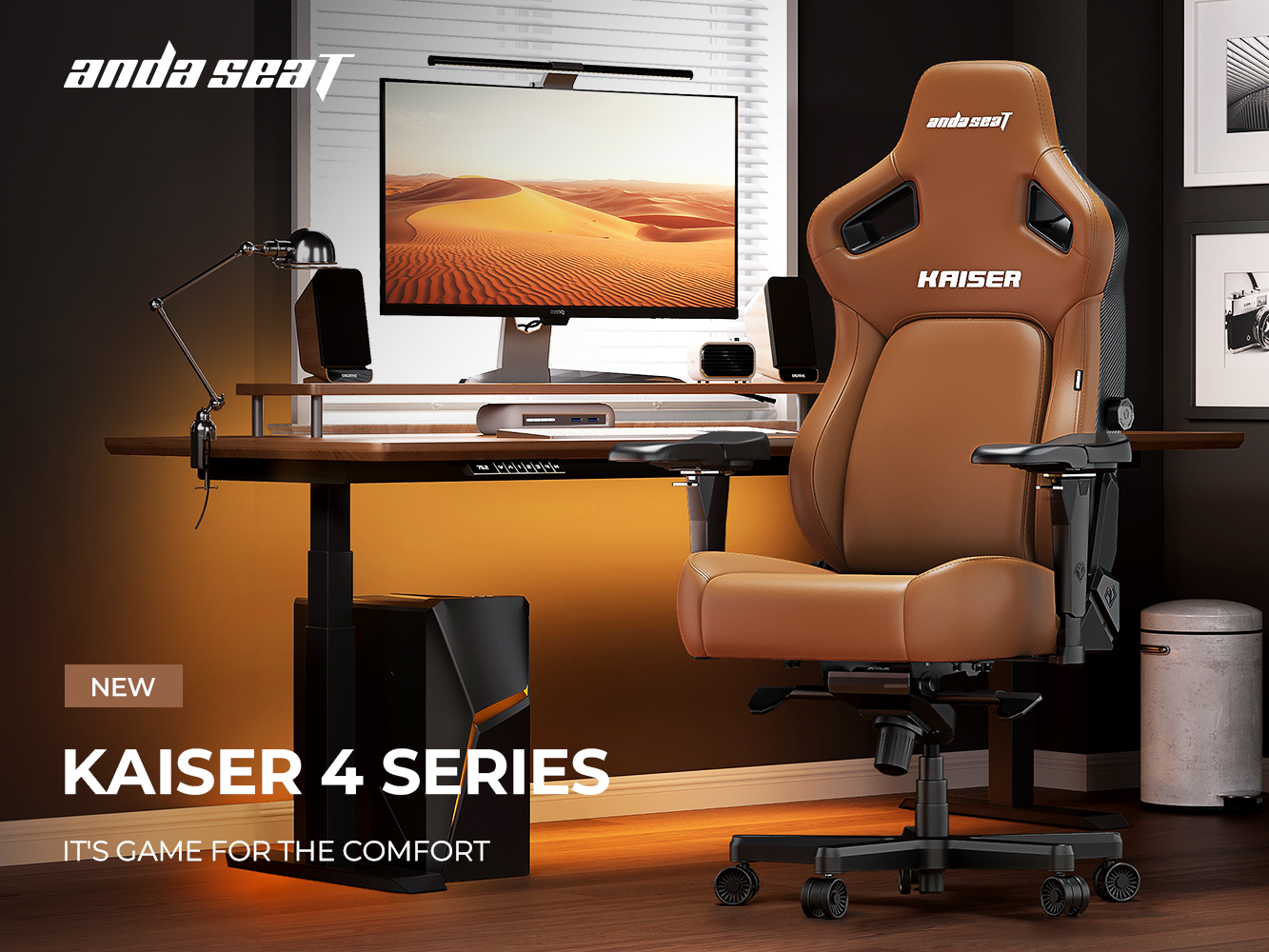
Kaiser 4 AndaSeat Brown
AndaSeat Presents Kaiser 4, Kaiser 3E, and X-Air as Seating Preferences Shift Ahead of Valentine’s Period
SPOKANE, WA, UNITED STATES, February 1, 2026 /EINPresswire.com/ -- As Valentine’s period approaches, consumer attention often turns to shared living environments, daily comfort, and practical gift considerations for the home. At the same time, broader shifts in work habits and lifestyle patterns are reshaping how seating products are evaluated. What was once a seasonal moment centered on dining or décor has increasingly become an opportunity for households to reassess functional items used every day, including seating for work, gaming, and long periods of sitting at home.Recent market research reflects this change in priorities. According to a 2025 global home ergonomics survey conducted by Statista and YouGov across North America and Europe, more than 62 percent of respondents reported spending over six hours per day seated at home, while 41 percent indicated they use the same chair for both work-related tasks and leisure activities such as gaming or content consumption. Notably, posture-related discomfort, including lower-back strain and shoulder tension, was cited as a recurring concern by over half of respondents under the age of 40.
These findings point to a broader recalibration in seating preferences. Rather than selecting chairs solely based on appearance or price, buyers are increasingly weighing ergonomic support, adjustability, and adaptability to shared or multi-use spaces. This shift is particularly visible during periods such as Valentine’s season, when purchasing decisions are often influenced by household needs rather than individual use alone.
Within this context, AndaSeat has observed growing differentiation in how users approach seating choices, reflected across its Kaiser 4, Kaiser 3E, and X-Air models. Together, these products illustrate how varying expectations around posture support, adjustability, and daily usage are shaping the contemporary seating landscape.
Changing Posture Awareness in Home-Based Routines
Health researchers have increasingly linked prolonged sitting with musculoskeletal strain, particularly when seating lacks adequate lumbar alignment and arm support. A 2024 review published by the European Journal of Occupational Health noted that improper seating posture remains one of the leading contributors to chronic lower-back discomfort among hybrid workers. The report emphasized that consistent lumbar positioning and armrest alignment play a critical role in mitigating cumulative strain over time.
As awareness of these issues grows, consumers are paying closer attention to how chairs respond to natural body movement rather than forcing static posture. This trend has influenced demand for seating designs that accommodate both upright focus and relaxed postures throughout the day, especially in households where a single chair may be used across multiple activities.
Kaiser 4: Addressing Advanced Adjustability Expectations
The Kaiser 4 reflects the needs of users who prioritize comprehensive ergonomic adaptability. Designed for extended daily use, the model integrates multi-directional arm support intended to align with varied desk heights, sitting angles, and body positions. The six-direction armrest system allows users to adjust vertical height, horizontal reach, depth, and rotational angles, supporting forearm alignment during both keyboard-based work and controller or mouse use.
In addition to arm support, the chair’s structure emphasizes lumbar stability through an integrated support mechanism that follows the natural curvature of the lower spine. This design responds to findings from ergonomic studies indicating that fixed cushions or external pillows often fail to maintain consistent spinal contact as users shift positions.
During Valentine’s period, when shared workspaces are common in apartments and home offices, such adjustability can be particularly relevant. Households with differing height ranges or usage patterns may find value in seating that can be reconfigured without tools or component changes, reducing the need for multiple specialized chairs.
Kaiser 3E: Balancing Familiar Structure with Streamlined Ergonomics
While some users seek maximum adjustability, others prefer a more straightforward ergonomic solution that still addresses posture fundamentals. The Kaiser 3E represents this segment, drawing on the structural foundation of the Kaiser 3 while simplifying certain features to focus on core support elements.
The chair’s integrated lumbar contour is built directly into the backrest, offering consistent lower-back contact without relying on adjustable modules. Research from the American Chiropractic Association suggests that continuous lumbar engagement, even at moderate intensity, can reduce fatigue during mid-length sitting sessions common in home environments.
Seat cushioning density and edge contouring are also designed to support neutral pelvic positioning, which is frequently cited by ergonomists as essential for maintaining spinal alignment. For users balancing work tasks, casual gaming, and daily household activities, this approach reflects a preference for reliable comfort without extensive manual adjustment.
As Valentine’s season often prompts practical gifting decisions, models like the Kaiser 3E align with buyers seeking versatile seating suitable for a range of daily scenarios rather than single-purpose use.
X-Air: Lightweight Support for Flexible Spaces
In contrast to high-density seating solutions, the X-Air addresses demand for breathable, visually lighter chairs that integrate seamlessly into shared living spaces. Mesh-based seating has gained traction in recent years, particularly among users concerned with temperature regulation and minimal visual footprint.
According to a 2025 indoor comfort study by the International Association of Ergonomics, mesh seating materials were associated with improved thermal comfort perception in warmer indoor environments, especially during extended sitting. The X-Air incorporates a full-mesh back and seat structure paired with dynamic lumbar shaping to provide support while allowing airflow.
Its design targets users who alternate between focused tasks and lighter activities, or who require a secondary chair within a household. During Valentine’s period, when multi-chair setups become more common due to shared gifting or bundled purchases, lightweight models such as X-Air often serve complementary roles alongside more robust primary seating.
Seating Choices as Household Decisions
One notable trend emerging from recent consumer surveys is the shift from individual-centric purchasing toward household-based evaluation. A Deloitte consumer insights report published in late 2024 found that 38 percent of respondents consider how furniture purchases will be used by more than one person before making a decision. This consideration was particularly prominent among couples and shared households under 45 years old.
Rather than selecting a single “best” chair, buyers increasingly assess how different models serve distinct roles within the same space. In this framework, advanced ergonomic chairs, streamlined support options, and lightweight mesh designs are viewed as complementary rather than competing.
Valentine’s season, while traditionally associated with symbolic gifts, has become a practical checkpoint for such evaluations. The timing encourages reassessment of everyday comfort items that support long-term wellbeing rather than temporary use.
Broader Implications for Seating Design
The evolving conversation around seating reflects wider changes in how people live and work. As boundaries between professional and personal spaces continue to blur, chairs are expected to adapt accordingly. Features once reserved for specialized office furniture are now assessed within the gaming and home seating categories, while aesthetic considerations increasingly emphasize compatibility with residential environments.
Industry observers note that this convergence has led to more nuanced product differentiation, where adjustability, support philosophy, and material choice define suitability for specific user profiles rather than hierarchical quality tiers.
Looking Ahead
As consumer awareness of posture health and daily comfort continues to grow, seating decisions are likely to remain influenced by both functional research and lifestyle context. Periods such as Valentine’s season highlight these considerations by bringing household needs into sharper focus, encouraging buyers to reflect on how seating supports shared routines over time.
By presenting Kaiser 4, Kaiser 3E, and X-Air within this broader framework, AndaSeat reflects an ongoing shift in seating preferences toward adaptability, ergonomic awareness, and practical integration into modern home life.
Caroline Chen
AndaSeat
+ + 86 139 2232 2347
email us here
Visit us on social media:
LinkedIn
Instagram
Facebook
YouTube
TikTok
X
Legal Disclaimer:
EIN Presswire provides this news content "as is" without warranty of any kind. We do not accept any responsibility or liability for the accuracy, content, images, videos, licenses, completeness, legality, or reliability of the information contained in this article. If you have any complaints or copyright issues related to this article, kindly contact the author above.
