

Beyond the App: The 2026 Market Trends of AI Note Taker
ai_voice_recorder_notion_integration
Industry analysis reveals a shift from smartphone apps to dedicated hardware, driven by advancements in piezoelectric recording, edge-computing privacy.
CO, UNITED STATES, February 4, 2026 /EINPresswire.com/ -- The consumer electronics sector has witnessed a distinct pivot in the first quarter of 2026, with the "AI Note Taker" category emerging as a critical tool for the modern workforce. Industry data reveals a marked departure from software-only recording solutions, as professionals increasingly adopt dedicated hardware to manage the "second brain" workflow. This shift is driven by a demand for higher fidelity audio, strict data privacy, and the need to decouple recording functions from the distractions of the primary smartphone interface.
The Divergence of Form Factors
Two years ago, the market was dominated by general-purpose voice memos. Today, the 2026 hardware landscape is defined by specialization, splitting primarily into "wearable" and "attachable" form factors.
Leading the wearable segment are devices like the Limitless Pendant and the Tab AI, which prioritize ambient, always-on capture. These discreet units, often worn as necklaces or magnetic lapel pins, are designed for "life logging"—capturing impromptu hallway conversations and creative sparks without user intervention. They compete directly with the Friend device, which uses similar form factors but focuses on emotional companionship rather than productivity.
In contrast, the attachable segment—devices designed to physically merge with smartphones—has become the standard for business and legal professionals. This category is currently led by the Plaud Note series, which popularized the MagSafe recording concept. However, the market has diversified with robust competitors like the UMEVO Note Plus. These devices utilize a slim, credit-card-sized chassis that snaps magnetically to the back of a mobile phone, allowing users to carry a dedicated recording studio without adding bulk to their pockets.
Legacy audio giants are also responding. Sony and Philips have recently updated their dictation lines to include Wi-Fi capabilities and direct integration with LLMs (Large Language Models), signaling that even traditional hardware manufacturers acknowledge the AI shift.
Hardware Innovation: The Piezoelectric Standard
A defining technical trend of 2026 is the universal adoption of piezoelectric vibration sensors (Vibration Conduction Sensors). In previous generations, recording a phone call required clumsy workarounds or speakerphone usage. Devices like the latest Plaud models now use these sensors to capture audio directly through the phone’s chassis. This hardware-level solution isolates the caller's voice from background noise, delivering studio-grade input that software-only apps cannot replicate due to OS-level privacy restrictions on iOS and Android.
Battery density has also seen significant gains. The industry standard has moved to a minimum of 30 hours of continuous recording, with devices like the Anker Soundcore work series pushing this boundary further. This longevity addresses "battery anxiety," ensuring that a device can survive a multi-day conference without requiring a recharge—a feat impossible for a smartphone running a background recording app.
The Software Ecosystem: From Transcription to Action
While hardware captures the data, the value lies in the software ecosystem. The 2026 workflow is no longer about generating a transcript; it is about "Agentic AI"—systems that can perform actions based on the data.
Leading software platforms such as Otter.ai and Fireflies.ai have evolved from standalone apps into infrastructure layers that integrate with these physical devices. For instance, a recording captured on a physical device is now automatically routed to enterprise platforms.
CRM Integration: Sales calls are parsed, and fields in Salesforce or HubSpot are updated automatically with deal sentiment and next steps.
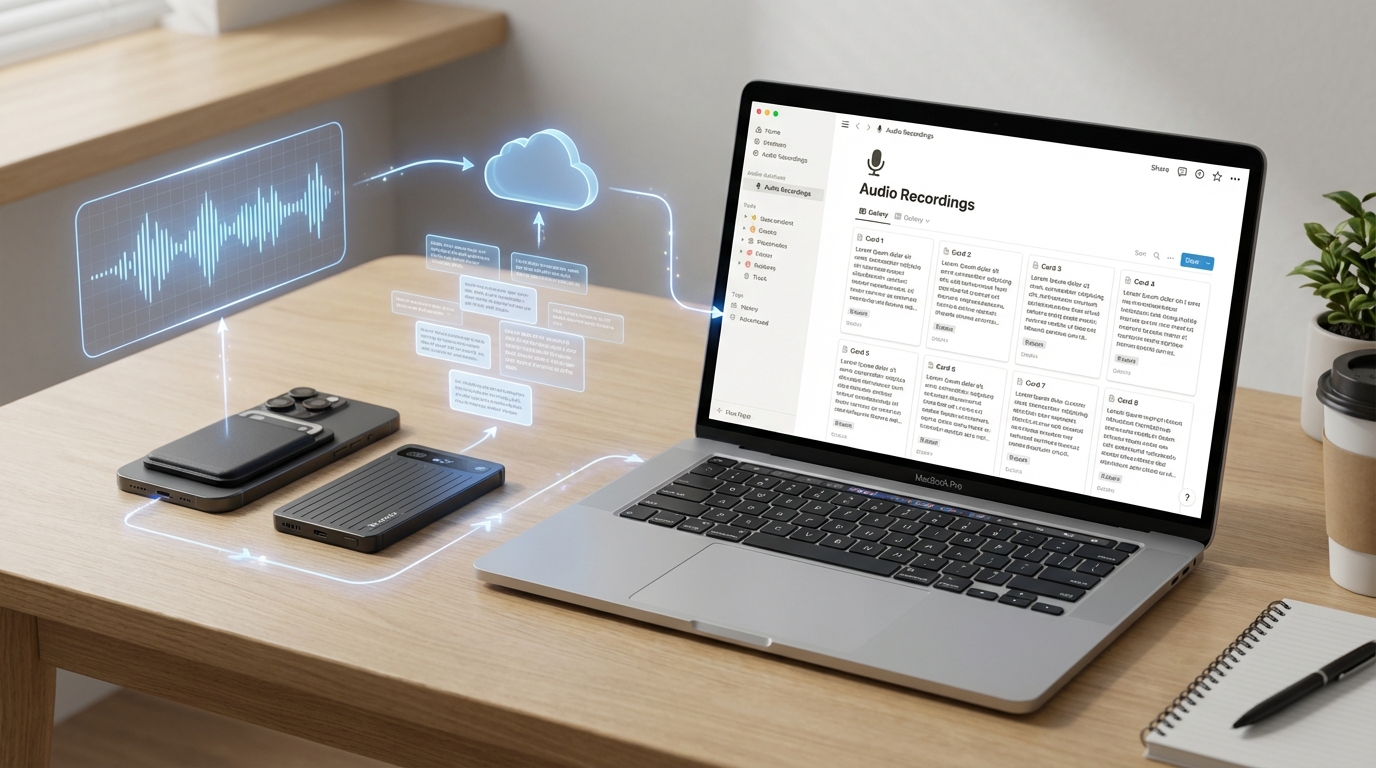
Knowledge Management: Internal strategy meetings are summarized and deposited directly into Notion databases or Obsidian graphs, linking related concepts across different meetings.
Workflow Automation: Action items are detected and pushed to Asana, Monday.com, or Slack channels, assigning tasks to specific team members without manual data entry.
Privacy and the Edge Computing Shift
As hardware becomes more powerful, privacy architecture has become a primary selling point. Enterprise clients in 2026 are increasingly rejecting cloud-only processing for sensitive data. This has led to the rise of "Edge AI" recording, where devices equipped with specialized neural processing units (NPUs) perform speaker diarization and initial transcription locally on the device.
Manufacturers are now categorized by their data sovereignty compliance. Devices that offer local-first storage and SOC 2 Type II compliance are gaining favor over cheaper, cloud-dependent alternatives. This bifurcation allows legal and medical professionals to utilize AI note-taking tools while remaining compliant with HIPAA and GDPR regulations.
Market Outlook
The "AI Note taker physical device" market is projected to continue its trajectory toward invisibility and integration. As we move further into 2026, the distinction between the recording device and the user's workflow will continue to dissolve. The hardware provides the reliable ears, while the integrated software ecosystem provides the brain, creating a closed loop of productivity that allows professionals to remain focused on the conversation, rather than the documentation.
James Miller
UMEVO
+1 425-891-8259
email us here
Legal Disclaimer:
EIN Presswire provides this news content "as is" without warranty of any kind. We do not accept any responsibility or liability for the accuracy, content, images, videos, licenses, completeness, legality, or reliability of the information contained in this article. If you have any complaints or copyright issues related to this article, kindly contact the author above.
