

Home Gaming and Work Spaces Converge, Influencing the Design Logic Behind AndaSeat Xtreme Series Standing Desk
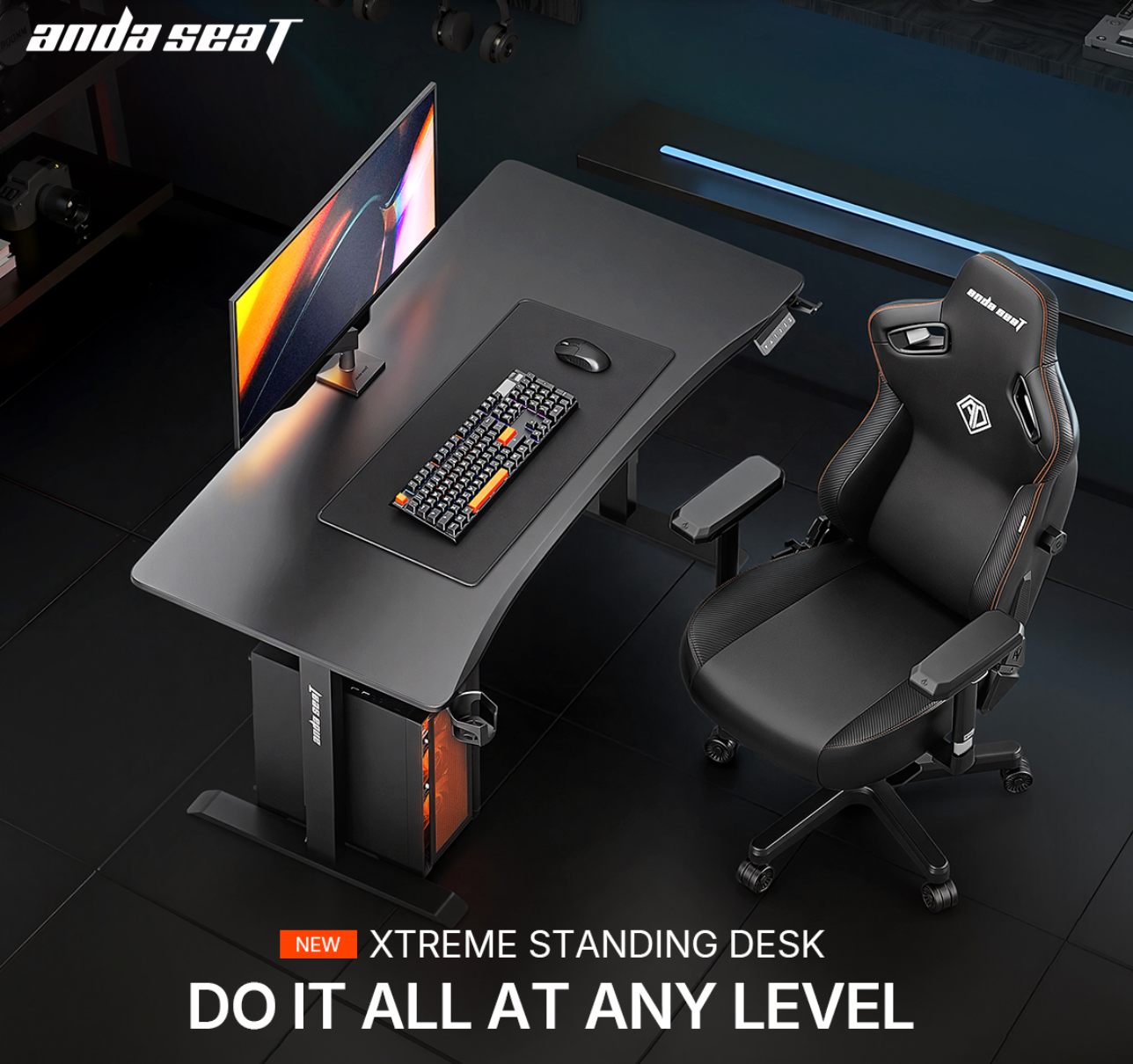
Xtreme Desk Dark & Kaiser 3
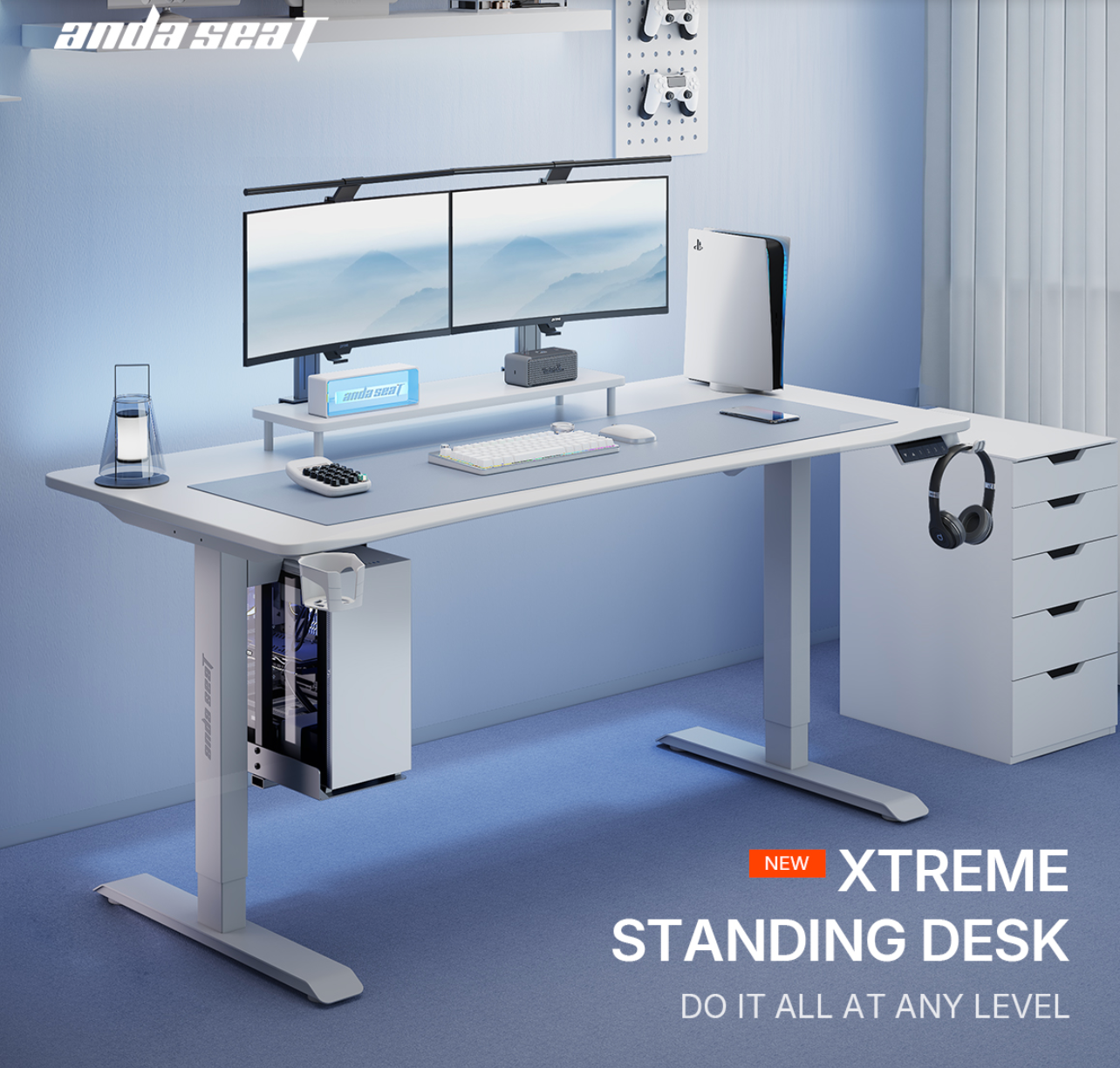
Xtreme Desk White Set Square
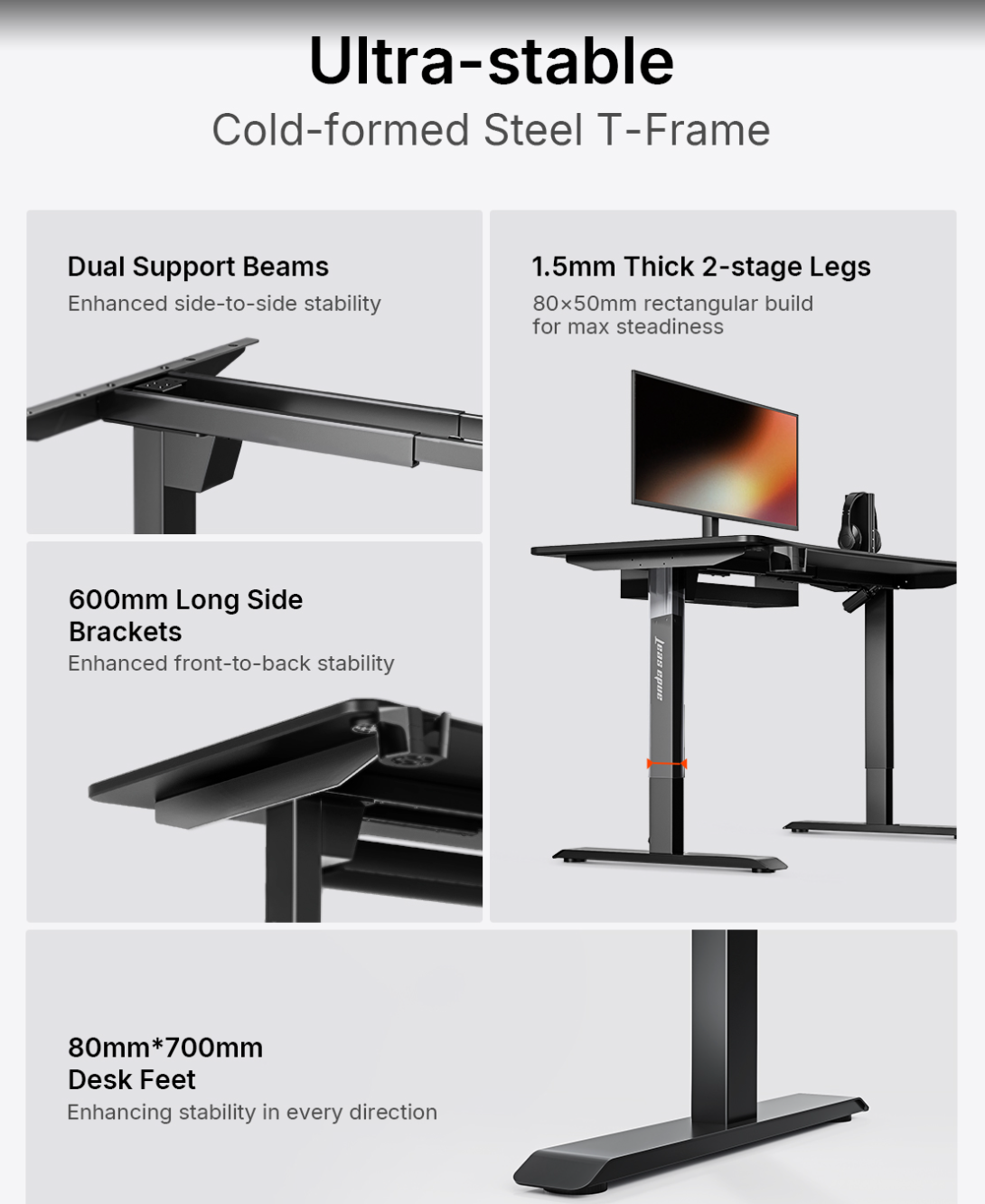
Xtreme Desk Feature Ultra Stable
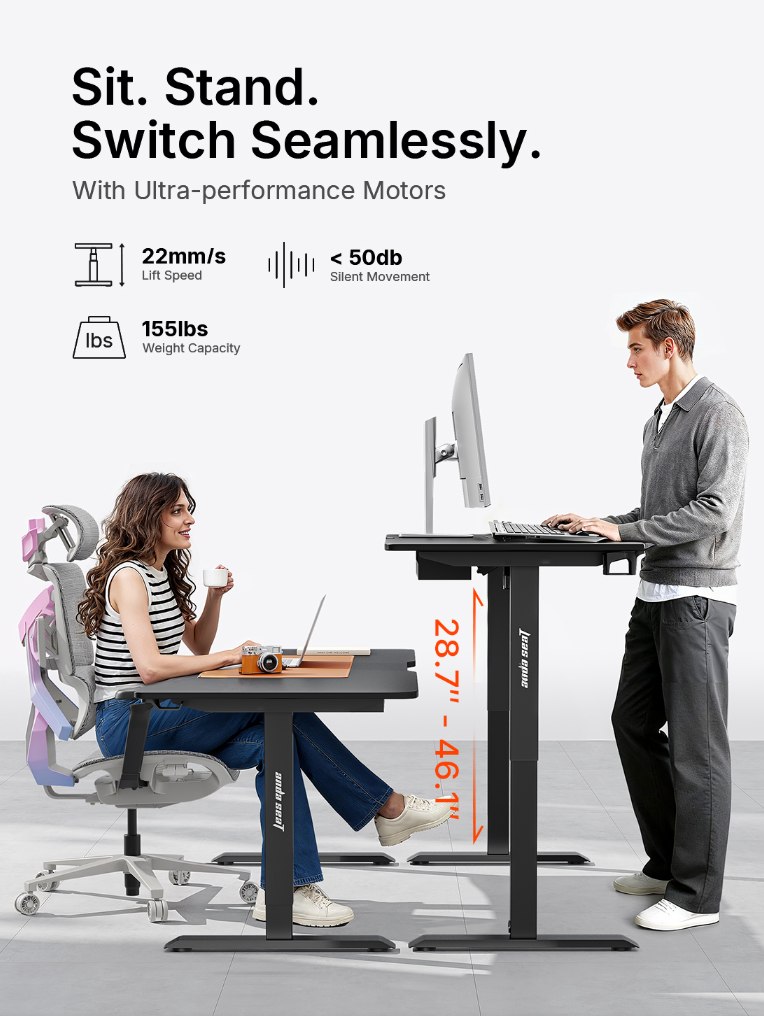
Xtreme Desk Feature Standing
Home Gaming and Work Spaces Converge, Influencing the Design Logic Behind AndaSeat Xtreme Series Standing Desk
SPOKANE, WA, UNITED STATES, February 10, 2026 /EINPresswire.com/ -- In recent years, the concept of a “home desk” has undergone a notable transformation. What was once a static surface dedicated primarily to office work has increasingly become a shared platform for multiple daily activities, including remote work, online learning, gaming, and creative use. As these routines converge within the same physical space, consumers are reassessing how furniture supports posture, movement, and visual order throughout the day.Market research published between 2024 and 2025 by workplace health and home living studies indicates that more than half of home users now alternate between sitting and standing during the day, yet a significant portion report abandoning sit-stand habits within months. Among the most frequently cited reasons are desk instability at standing height, disruptive motor noise, and cable clutter that makes shared spaces feel disorganized.
These findings suggest that the challenge facing standing desks in home environments is no longer awareness, but sustained usability. It is within this context that the AndaSeat Xtreme Series standing desk has been positioned as a response to how sit-stand furniture is actually used at home today.
Sit-Stand Adoption Is Increasing, but Consistency Remains a Challenge
Surveys conducted across North America and Europe show that posture awareness among home users has increased steadily since remote and hybrid routines became widespread. Reports indicate that approximately sixty percent of respondents have tried a sit-stand desk or adjustable workstation at home. However, fewer than half of those users continue using standing positions regularly after the first several months.
Behavioral analysis from ergonomic research highlights three recurring obstacles that interrupt long-term adoption. First, instability at standing height can discourage users from typing, leaning, or gaming with confidence. Second, mechanical noise during height adjustment can disrupt calls, shared living spaces, or gaming sessions. Third, visible cable clutter often undermines the visual order of rooms that must serve both professional and personal purposes.
As a result, many users conclude that standing desks are better suited to offices than homes, despite ongoing interest in posture variation and movement.
Home Setups Are Now Multi-Purpose by Default
Unlike traditional office environments, home spaces must accommodate overlapping needs. A single desk may support work during the day, gaming in the evening, and shared family use on weekends. Studies examining home furniture usage patterns show that over sixty percent of households with a standing desk use it for at least two different activities daily.
This shift places new expectations on furniture design. Rather than emphasizing speed or advanced automation, users increasingly prioritize reliability, predictability, and visual simplicity. In this context, standing desks are evaluated less as productivity tools and more as everyday household furniture.
The AndaSeat Xtreme Series standing desk was developed with these evolving usage patterns in mind, focusing on controlled height transitions, structural stability, and integrated cable management suitable for shared and visible environments.
Controlled Height Adjustment for Everyday Use
One of the primary barriers to consistent sit-stand use at home is disruption. Sudden movement, excessive vibration, or audible motor noise can discourage users from adjusting desk height frequently.
The Xtreme Series employs a single-motor electric lift system designed to deliver smooth and controlled height transitions across a range suitable for seated and standing tasks. With a vertical adjustment range from 28.7 inches to 46.1 inches, the desk accommodates common sitting and standing positions used in work, gaming, and study setups.
Rather than emphasizing rapid motion, the lift mechanism operates at a measured speed intended to feel predictable during daily use. Independent testing places operational noise below fifty decibels, supporting quieter adjustments during calls or shared activities.
This approach reflects a growing understanding that consistency, rather than speed, plays a critical role in long-term sit-stand adoption within home environments.
Stability as a Foundational Requirement
Stability remains one of the most cited concerns among users evaluating standing desks for home use. Research examining user drop-off rates shows a strong correlation between perceived wobble and reduced standing frequency.
The Xtreme Series addresses this issue through a cold-formed steel T-frame structure engineered to maintain rigidity across its full height range. Reinforced structural elements support everyday movements such as typing, leaning, or gaming without introducing noticeable flex.
The desk supports up to seventy kilograms of distributed load, including the desktop, aligning with the needs of common home setups that include monitors, laptops, peripherals, and gaming equipment. This emphasis on structural consistency reflects the growing recognition that confidence at standing height is essential for regular use.
Cable Management as a Core Design Consideration
As home desks increasingly occupy visible areas, cable management has become a defining factor in purchase decisions. Studies focused on home workspace satisfaction consistently rank cable clutter among the top visual stressors reported by users.
Rather than treating cable organization as an accessory, the Xtreme Series integrates routing directly into the desk structure. Internal leg channels guide cables downward, reducing exposed wiring, while a steel cable management tray beneath the desktop houses power strips and excess cables.
This integrated system helps maintain a cleaner appearance both above and below the desk surface, supporting use in shared living spaces where visual order is particularly important.
Desktop Options Designed for Real Home Layouts
Home environments vary widely in available space, from compact apartments to shared family rooms. Research into furniture returns and dissatisfaction shows that improper desk sizing is a common cause of regret.
The Xtreme Series offers multiple desktop dimensions to accommodate different room sizes and equipment needs. The surfaces are finished with a matte, anti-glare coating designed to reduce reflections and simplify maintenance. Neutral color options support integration into a range of interior styles without drawing undue visual attention.
By offering size flexibility without introducing stylistic complexity, the desk aligns with the broader trend toward furniture that adapts to living spaces rather than dominating them.
Everyday Ergonomics Through Simple Controls
Behavioral studies on sit-stand adoption emphasize the importance of ease. Users are more likely to maintain posture variation when adjustments require minimal effort.
The Xtreme Series includes a digital control panel with programmable height memory, enabling users to transition between preferred positions efficiently. Additional features such as sedentary reminders, child lock, and anti-collision functionality support safe and consistent use within family settings.
Rather than presenting these features as performance enhancements, the design focuses on reducing friction in daily routines, encouraging gradual and sustainable posture changes.
Xtreme Series Within the AndaSeat Ergonomic Ecosystem
The Xtreme Series standing desk extends AndaSeat’s broader focus on ergonomic furniture designed for prolonged use across gaming, work, and hybrid environments. While the brand has long been associated with ergonomic seating, the expansion into sit-stand furniture reflects the same emphasis on structural engineering and user-centered design.
Within the context of home setups where desks and chairs are increasingly evaluated together, the Xtreme Series complements existing ergonomic seating solutions by addressing posture variation at the workstation level.
As sit-stand furniture continues to move from offices into everyday homes, products such as the AndaSeat Xtreme Series illustrate how design priorities are shifting from novelty toward sustained usability.
An Evolving Market Without a Single Answer
The growing adoption of standing desks in home environments reflects broader changes in how people work, play, and live within shared spaces. Research suggests that no single desk configuration fits every household, and preferences continue to evolve alongside daily routines.
What remains consistent is the importance of stability, simplicity, and integration within the home. As consumers weigh their options, furniture designed around real-world use cases rather than idealized office scenarios is likely to play an increasingly central role.
Caroline Chen
AndaSeat
+86 139 2232 2347
email us here
Visit us on social media:
LinkedIn
Instagram
Facebook
YouTube
TikTok
X
Legal Disclaimer:
EIN Presswire provides this news content "as is" without warranty of any kind. We do not accept any responsibility or liability for the accuracy, content, images, videos, licenses, completeness, legality, or reliability of the information contained in this article. If you have any complaints or copyright issues related to this article, kindly contact the author above.
